Burnt Timber Cladding: The Ancient Technique Making a Modern Comeback
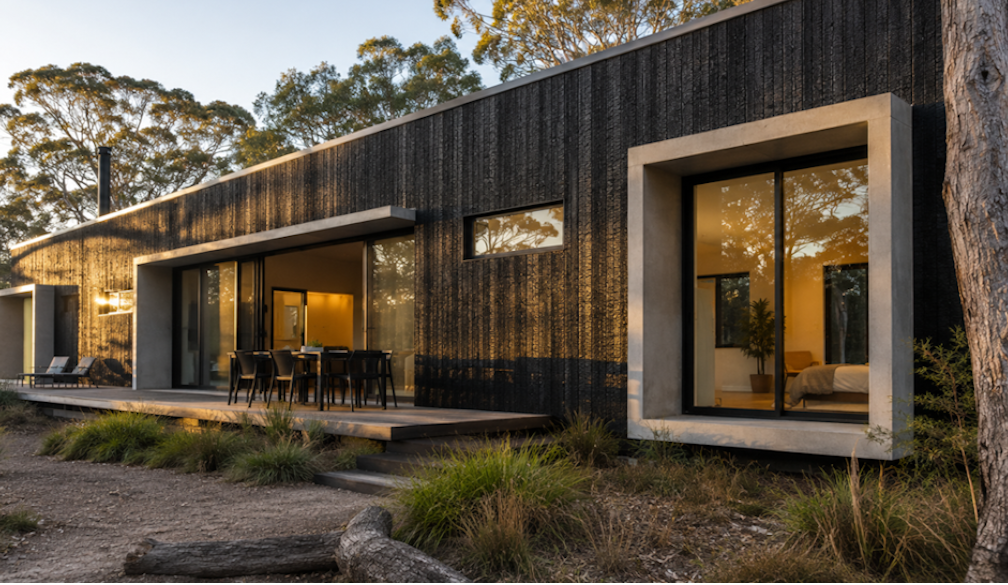
Why burnt timber cladding is capturing attention
There's something striking about a home clad in darkened, textured timber. It doesn't look like every other house on the street, and that's precisely the point. Burnt timber cladding, the practice of charring the outer surface of timber boards to protect and preserve them, has become one of the most talked-about exterior finishes in contemporary Australian architecture. What was once a centuries-old Japanese preservation method is now a serious contender for homeowners and designers looking for something that's both visually compelling and genuinely durable.
Whether you're renovating a federation cottage, building a coastal retreat, or designing a commercial space that needs to make a statement, burnt timber cladding offers a finish unlike anything else on the market. It's tactile, dramatic, and when done properly, extraordinarily long-lasting.
In this guide, we'll break down exactly how burnt timber cladding works, why it performs so well in the Australian climate, and what you need to consider before committing to this finish for your next project.
The origins of charred timber: a technique built to last
Burnt timber cladding traces its roots to Japan, where the technique is known as shou sugi ban or yakisugi, meaning 'burnt cedar board'. Japanese builders discovered centuries ago that charring the surface of timber dramatically improved its resistance to insects, moisture, fire, and decay. Rather than relying on chemical treatments or regular maintenance, the charred layer created a natural, self-protecting surface that could last for decades with minimal intervention.
The process works by converting the outer layer of the timber into carbon. Carbon doesn't rot, doesn't attract termites, and creates a hydrophobic surface that repels water. The result is a cladding material that actually improves with age rather than deteriorating, a quality that's genuinely rare in the building industry.
Western architects and designers began embracing the technique in earnest over the past two decades, recognising both its aesthetic power and its practical advantages. Today, burnt timber cladding appears on everything from high-end residential builds to boutique hospitality venues, contemporary office fit-outs, and coastal homes where weather resistance is non-negotiable.
How charred timber cladding is produced
The charring process can be achieved in a few different ways, with results varying significantly depending on the method used.
Traditional shou sugi ban involves burning three timber boards together in a triangular configuration, creating a chimney effect that draws the flame upward and chars the surface evenly. The boards are then cooled with water, brushed to remove loose carbon, and treated with a natural oil, typically tung or linseed oil, to seal and stabilise the surface.
Modern production methods have scaled this process considerably. Specialist suppliers use controlled burning chambers, gas torches, or industrial equipment to achieve consistent results across large volumes of timber. This ensures that the depth of char and the final surface texture remain uniform across an entire project, which is critical when you're cladding a full building facade.
The level of char also significantly affects the final aesthetic and performance profile of the product:
- Light char — a subtle texture with hints of darkening; the timber grain remains largely visible
- Medium char — deeper carbonisation with a more pronounced texture and darker colour
- Deep char — a fully blackened, cracked surface resembling alligator skin; maximum carbon content and weather resistance
Knowing which level of char suits your project and your local climate is an important early conversation to have with your supplier.
Performance advantages in the Australian climate
Australia's climate presents some specific challenges for exterior timber. UV radiation is intense, particularly in Queensland and Western Australia. Coastal regions deal with salt air, moisture, and wind. Bushfire-prone zones demand materials that don't readily ignite. Burnt timber cladding addresses all of these concerns in a single product.
UV resistance
The carbonised surface of charred timber doesn't bleach or fade in the way that untreated or painted timber does. While raw timber can become silvery-grey within a season or two of UV exposure, the dark carbon layer on burnt cladding remains stable over time. If anything, the surface develops a richer patina as it weathers, a desirable quality for most design briefs.
Moisture and rot resistance
Carbon is hydrophobic, meaning it actively repels water rather than absorbing it. This is a significant advantage in coastal climates or regions with high annual rainfall. Combine this with a quality oil treatment applied to the surface, and you have a cladding product that sheds moisture effectively without the need for regular repainting or resealing.
Termite and insect resistance
One of the lesser-discussed benefits of charred timber cladding is its resistance to termites and wood-boring insects. There's nothing appealing about carbonised timber to insects that feed on cellulose; the carbon layer eliminates the biological material they seek. In a country where termite damage costs homeowners millions of dollars every year, this is a genuinely meaningful advantage.
For homeowners and architects looking for a premium burnt timber cladding solution backed by quality craftsmanship, sourcing from a reputable Australian supplier ensures you're getting a product engineered for local conditions rather than one imported without consideration for our climate.
Design applications: where burnt timber cladding works best
One of the reasons burnt timber cladding has gained such traction in Australian design circles is its versatility. It's equally at home on a minimalist bush retreat as it is on a contemporary urban terrace.
Common applications include:
- Exterior wall cladding on residential homes and renovations
- Feature walls on commercial and hospitality projects
- Fencing, screens, and privacy panels
- Internal feature walls in residential and commercial interiors
- Architectural accents — door surrounds, window reveals, fascia panels
The deep black of a fully charred exterior pairs beautifully with raw concrete, white render, and natural stone. Lighter char finishes work well on heritage homes where you want the warmth of timber without an overtly industrial look. Interior applications used sparingly on a single feature wall or ceiling panel add texture and drama without overwhelming a space.
Architects working on multi-residential projects have also started using charred timber as a way to break up facade monotony, applying it to selected panels or levels to create rhythm and contrast across a larger building.
Maintenance requirements: less than you might think
A common misconception about burnt timber cladding is that it requires significant ongoing maintenance. In reality, a well-made charred timber facade is one of the lower-maintenance exterior finishes available, particularly when compared to painted weatherboard or untreated hardwood.
The main maintenance task is periodic re-oiling of the surface. Depending on your climate and the level of exposure, this is typically required every two to seven years. The oil replenishes the moisture barrier on the surface, maintains the richness of the finish, and helps the carbon layer remain stable. It's a straightforward job that most homeowners can do themselves.
There's no painting, no staining, and no sanding involved. If the surface weathers and you're happy with the aged look, which many homeowners are, you can leave it entirely untouched for years. The timber won't rot, blister, or peel in the way that painted finishes do.
The key is ensuring the initial installation is done properly: correct gap allowances for expansion and contraction, appropriate fastener choices (stainless steel is recommended for longevity), and adequate flashings and waterproofing at junctions. Get the installation right, and the ongoing maintenance burden is minimal.
Selecting the right timber species for charring
Not all timber species char in the same way, and the choice of species will influence both the aesthetics and the performance of the finished product.
Traditional Japanese shou sugi ban uses cedar, which chars evenly and retains a beautiful texture. In Australia, several species work exceptionally well:
- Western red cedar — even char, beautiful grain, lightweight
- Accoya — acetylated radiata pine with outstanding dimensional stability
- Victorian ash — strong grain patterns with excellent char depth
- Radiata pine — readily available, takes char well, economical option
Hardwoods can also be charred, though they typically require more intensive burning due to their density. The result is often a more rugged, textured surface that suits industrial or raw architectural aesthetics.
The timber's moisture content at the time of charring also matters; green or high-moisture timber can produce inconsistent char depth and is more prone to checking (surface cracking) after installation. Kiln-dried timber is the preferred starting point for producing consistent, quality charred cladding. If you're researching the full range of charred timber cladding options available for Australian projects, it's worth looking at suppliers who offer multiple species and char levels to give you maximum design flexibility.
Cost considerations
Burnt timber cladding sits in the mid-to-premium price range when compared to other exterior cladding materials. It typically costs more than painted fibre cement or basic weatherboard, but is often comparable to or less expensive than premium composite products, stone veneer, or architectural metal cladding.
The longer lifecycle is a key part of the value equation. If a burnt timber facade requires no painting for 20 years versus a painted hardboard system that needs repainting every seven to ten years, the lifecycle cost comparison shifts considerably in timber's favour. Factor in the time, cost, and disruption of repainting a full building exterior, and the economics of charred timber become compelling.
Labour costs for installation are broadly similar to other horizontal or vertical timber cladding systems. The main consideration is ensuring your installer is familiar with the specific requirements of charred timber, including correct fastener types, appropriate edge treatment, and the handling and care required to avoid marking the surface during installation.
Conclusion
Burnt timber cladding has earned its place in contemporary Australian architecture for good reason. It combines exceptional durability with a visual character that's impossible to replicate with any synthetic material, the depth, texture, and warmth of natural timber, preserved and enhanced through fire. For homeowners, renovators, and designers looking for an exterior finish that performs in our climate, ages gracefully, and requires minimal maintenance, charred timber is one of the most compelling choices available today.
As with any specialist building product, the quality of the material and the quality of the installation both matter enormously. Take the time to source your cladding from a supplier with genuine expertise in the product, and work with a builder or installer who understands its specific requirements. Done properly, burnt timber cladding is the kind of finish that defines a building and holds its character for decades.