China debuts first mixed-mode autonomous railway yard to boost logistics efficiency
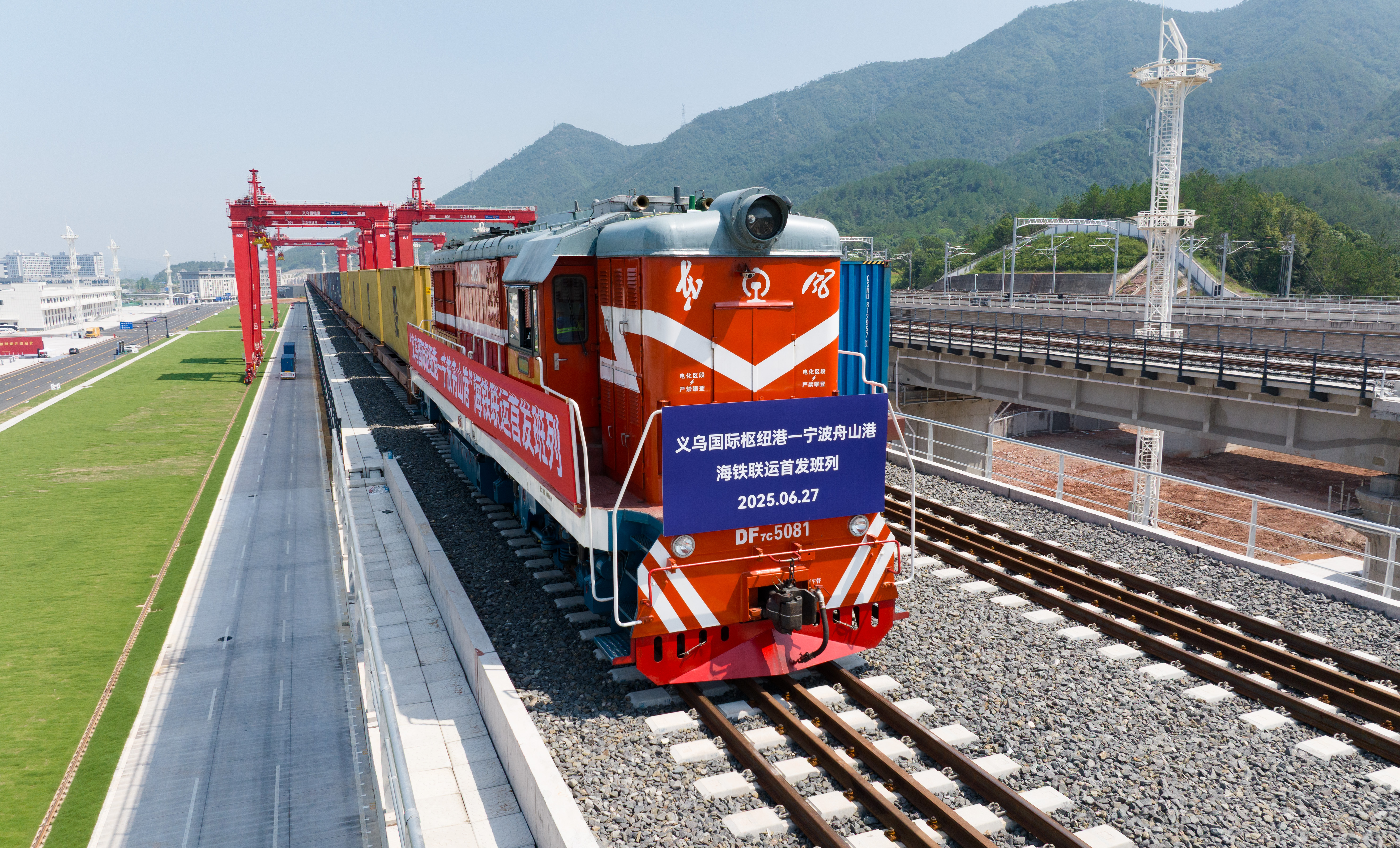
The first train of the sea-rail intermodal service from Yiwu International Hub Port to Ningbo-Zhoushan Port has officially departed.
The Suxi container handling station in Yiwu, east China's Zhejiang Province, began operations on June 27, with a freight train carrying 100 standard containers departing for the Ningbo-Zhoushan Port, the world's busiest cargo hub by tonnage, according to the Hangzhou Railway Logistics Center of the China Railway Shanghai Bureau Group.
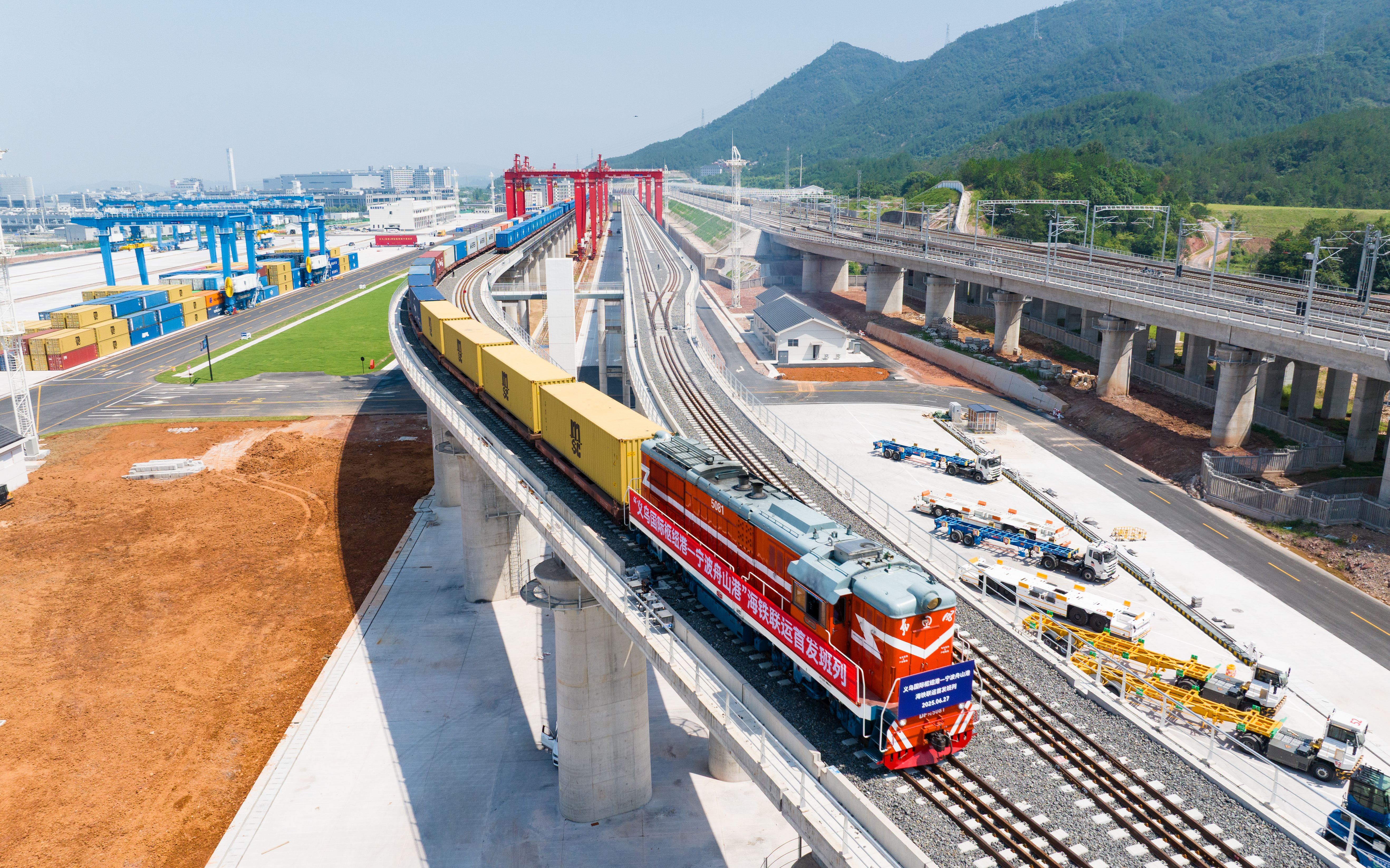
The Suxi container handling station, the country's first railway terminal for automated driving in a mixed operation mode, has been opened for use.
As part of the Yiwu (Suxi) International Hub Port, the terminal connects to the Ningbo-Jinhua Railway and has an annual design capacity of 660,000 twenty-foot equivalent units (TEUs). It features a rail loading zone, a container yard, a customs supervision area, and a digital management system.
The facility, approved as China's first railway yard autonomous driving experimental zone, integrates remote-controlled gantry cranes, automated storage systems, and intelligent transporters to enable unmanned operations alongside traditional workflows. This hybrid model marks a milestone in China's push to modernize logistics infrastructure, according to industry officials.
"This sets a new standard for autonomous operations in China's railway network," said Li Jinsong, deputy director of the Hangzhou Railway Logistics Center. "The mixed-mode design allows for seamless integration of automated and manual processes, enhancing efficiency while ensuring operational flexibility."
Zhao Jianmin, general manager of Zhejiang Seaport Yiwu Hub Port Co., Ltd, highlighted the terminal's role in connecting inland Yiwu with the Ningbo-Zhoushan Port, enabling "one-time declaration, inspection, and release" for goods.
By establishing a logistics corridor connecting the two regions, the terminal reduces transit times and costs, as cargo entering the Suxi station is treated as if it has arrived at the seaport, Zhao said.
The issuer is solely responsible for the content of this announcement.