Think wine is a virtue, not a vice? Nutrition label information surprised many US consumers
- Written by Deidre Popovich, Associate Professor of Marketing, Texas Tech University
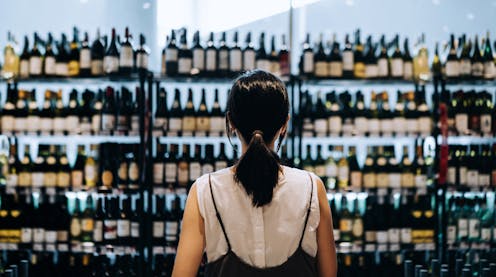
When you reach for that bottle of wine this Valentine’s Day, do you know how healthy it is? Many people have a too-rosy view of the beverage and are surprised when confronted with the facts about it on a nutrition label, according to a study my co-author Natalia Velikova[1] and I[2] recently published in the Journal of Consumer Marketing[3].
Our findings could have big implications for the wine industry, particularly as some groups in the U.S. are pushing[4] for wine to have mandatory nutrition labels.
Right now, people usually think of wine as a “virtue” rather than a “vice,”[5] thanks to popular beliefs about its health benefits[6] and news coverage of its antioxidant effects. But requiring nutrition labels, which are currently voluntary, could change those views.
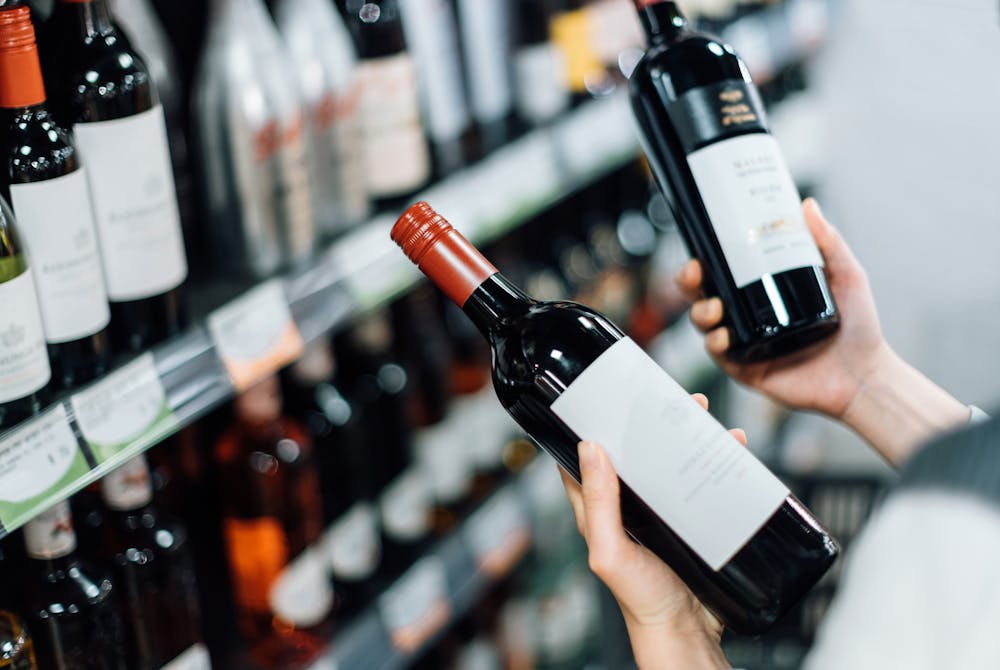
In our experimental research, which included nearly 800 participants, we found that American consumers aren’t used to seeing nutrition information on wine labels, and most are surprised by what they read since they don’t associate wine with calories, carbohydrates and sugar. People who were prompted to read labels viewed wine as less healthy than they did beforehand, and they were less likely to buy it.
We also found that people are more surprised by the sugar content of sweeter wines, such as Moscato, than by the number of calories. Sweet wines, in particular, may contain more sugar than consumers realize.
Why it matters
The European Union recently mandated nutrition labeling on wine[7], sometimes in the form of QR codes[8], and industry analysts expect the U.S. will eventually follow suit[9]. The Treasury Department’s Alcohol and Tobacco Tax and Trade Bureau, which regulates wine production, has already agreed to issue some preliminary rules[10] for mandatory ingredient labeling.
Nutrition labels don’t need to be bad news for the wine industry. Wine sales have recently declined[11] among those 60 and younger, and greater transparency in labeling could help rekindle young consumers’ interest.
Millennial and Gen Z consumers[12] may especially appreciate clearer labels, since it could help them view wine as less mysterious and more accessible. It may also allow them to fit an occasional glass of wine into their personal health goals. Younger consumers might also be more interested in eliminating as many highly processed ingredients as possible[13] from their diets.
What’s more, there’s been a recent trend toward wine packaging including labels like “organic,” “biodynamic” and “sustainable,” which may appeal to consumers’ preferences for sustainability. These labels have less to do with nutrition than with manufacturers trying to appear eco-friendly — but makers of natural wine would likely benefit most from offering nutrition information to support their front-of-label claims.
What other research is being done
German researchers have found that most consumers often overestimate calories in wine before viewing nutritional labels, and they don’t think the information is useful[15]. The researchers found that consumers often feel insecure and confused after reading wine ingredient information. Reviewing ingredient lists also made consumers less likely to view wine as a natural product.
On the manufacturer side, research shows that mandatory nutrition labeling would affect the wine industry in several ways — notably by increasing overhead costs[16] related to compliance, laboratory analyses and more challenging labeling processes. This could disproportionately hurt smaller wineries with fewer resources.
What still isn’t known
We still don’t know who is most likely to read and use nutrition labels on wine, but younger customers seem to be more interested[17] in food labels generally. Millennials report they are eating healthier[18] and exercising more[19] than previous generations.
And there’s still more to learn about how nutrition labels affect behavior. Studies have shown mixed results, but on the whole, labeling appears to make people cut their calorie consumption[20] somewhat. Still, the U.S. put nutrition labels on foods in the 1990s, and that hasn’t stopped the obesity rate from rising[21].
References
- ^ Natalia Velikova (www.depts.ttu.edu)
- ^ and I (www.depts.ttu.edu)
- ^ Journal of Consumer Marketing (doi.org)
- ^ some groups in the U.S. are pushing (www.fooddive.com)
- ^ a “virtue” rather than a “vice,” (doi.org)
- ^ health benefits (www.health.harvard.edu)
- ^ mandated nutrition labeling on wine (www.wineenthusiast.com)
- ^ QR codes (www.decanter.com)
- ^ the U.S. will eventually follow suit (wineindustryadvisor.com)
- ^ agreed to issue some preliminary rules (www.cspinet.org)
- ^ recently declined (www.svb.com)
- ^ Millennial and Gen Z consumers (doi.org)
- ^ eliminating as many highly processed ingredients as possible (doi.org)
- ^ D3sign/Getty Images (www.gettyimages.com)
- ^ don’t think the information is useful (doi.org)
- ^ increasing overhead costs (doi.org)
- ^ seem to be more interested (doi.org)
- ^ eating healthier (doi.org)
- ^ exercising more (www.physicalactivitycouncil.org)
- ^ cut their calorie consumption (doi.org)
- ^ obesity rate from rising (www.cdc.gov)
Authors: Deidre Popovich, Associate Professor of Marketing, Texas Tech University