Why rural hospitals in Pennsylvania and across the country are closing in increasing numbers – 5 myths about rural health care
- Written by Shayann Ramedani, Research Collaborator at the Clinical and Translational Science Institute, Penn State
Some Pennsylvania hospitals are being pushed beyond the brink of closure.
Taylor Hospital in Ridley Park closed in April 2025[1], Crozer-Chester Medical Center in Upland closed in May 2025[2], and Heritage Valley Kennedy Hospital, formerly the Ohio Valley Hospital, in Kennedy Township closed in June 2025[3].
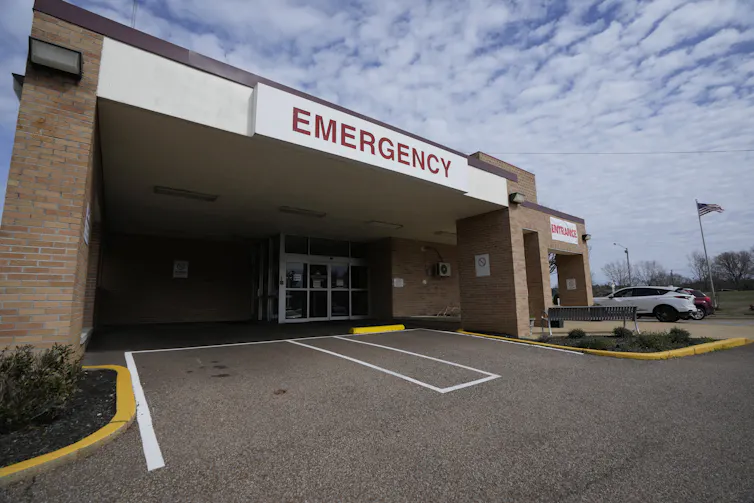
Rural hospitals are particularly vulnerable.
The UNC Sheps Center, which tracks rural hospital infrastructure in the United States, has documented 195 rural hospitals[4] that have closed or converted to outpatient facilities since January 2005. Six are in Pennsylvania. Closures have far outpaced the opening of new rural hospitals[5] during this period.
As a physician who has trained in rural communities[6] and a researcher who studies community well-being and public health[7], we see that every rural hospital closure exerts a domino effect on surrounding communities and residents. This can be difficult to quantify but manifests as lost jobs and economic decline, poorer health and a pervasive sense of fraying community fabric.
Our 2022 study found that when a rural hospital closes, hospitals nearby see a measurable spike in inpatient admissions and emergency room visits that can cause significant financial strain. It’s a phenomenon we called “the bystander effect[8]” of hospital closures.
Closures can sometimes feel random, but they are predictable consequences of the combination of health policy and market forces.
Spending cuts and Pennsylvania budget
Recent federal legislation has made the financial outlook for rural hospitals more precarious. The package of tax breaks and spending cuts[9] that President Donald Trump signed into law on July 4, 2025, reduced Medicaid eligibility for Americans and capped federal reimbursements to hospitals and other health care providers.
These reimbursements are a critical revenue source for rural hospitals, which tend to serve large numbers of Medicaid patients.
State officials estimate Pennsylvania could lose about US$20 billion in federal Medicaid funding[10] over the next decade, beginning in 2028, due to the 2025 law. Pennsylvania currently receives $32.6 billion[11] in annual federal Medicaid funding.
Within this complicated and shifting policy landscape, federal and state policymakers are also trying to stabilize rural health systems. The 2025 tax and spending law also authorized a $50 billion Rural Health Transformation Program[12] in 2025 aimed at stabilizing rural care infrastructure.
Meanwhile, Pennsylvania Gov. Josh Shapiro’s proposed $53.3 billion state budget for 2026-27 would maintain current hospital funding levels while adding $1 billion in Medicaid spending.
Why rural hospitals are in crisis
Rural hospitals face a financially difficult task: serve an older, working-class community while staying solvent and being prepared for emergencies at any hour.
The core problem is what economists term “high fixed costs” – for staff, equipment, facilities and administration – that stay relatively stable even when fewer patients walk through the door[13].
Rural hospitals also tend to rely heavily on Medicaid and Medicare reimbursements[14], which typically pay less than private insurance companies. This leaves a smaller cushion when costs rise.
Policy choices can change the odds. A 2018 study found that states that expanded Medicaid[15] under the Affordable Care Act saw rural hospitals perform better financially and close less often[16], especially those in areas with large uninsured populations.
When hospitals begin to struggle financially, they often seek a larger entity to buy them or try to merge into a robustly financed health system. But consolidation has trade-offs. One national study found commercial insurance prices for patients at nearby hospitals rose 3.6%[17] after a rural hospital closed.
In 2021 the Centers for Medicare & Medicaid Services began granting a “rural emergency hospital” designation[18]. This designation allows struggling rural hospitals to keep their emergency departments and outpatient services while eliminating inpatient beds.
For some communities, having a rural emergency hospital preserves a critical point of access to care. Yet residents still feel the loss of other hospital services[19] that are no longer available locally.
Cascade of consequences
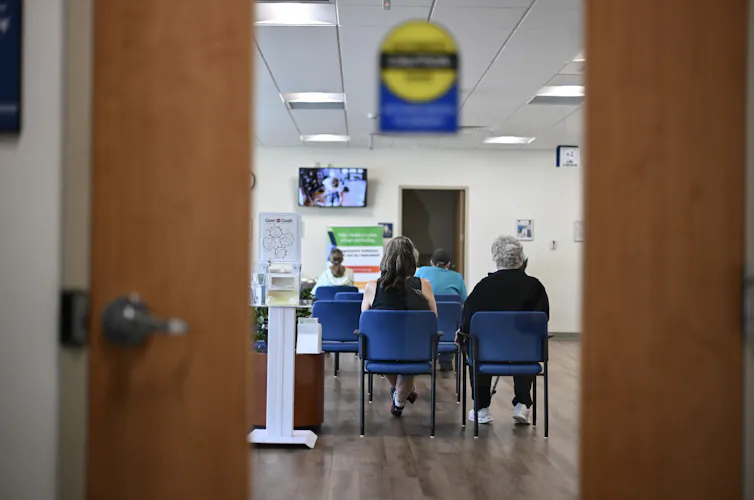
We’ve observed that the communities hit hardest by rural hospital closures share some common traits: shrinking and aging populations[21], loss of manufacturing or mining jobs[22], increasing rates of “diseases of despair[23]” – suicidality, drug abuse, alcoholism – difficulty recruiting health care workers, and fewer local medical services when something goes wrong.
The most immediate consequence of a closure is the distance former patients must travel for care. Patients in urban areas often have many health care options at their disposal, but the Government Accountability Office has found that after closures, rural residents traveled about 20 miles farther for routine care[24] and up to 40 miles farther for specialized services such as addiction treatment.
This can have consequences: a longer and costlier ambulance ride, a missed follow-up because an appointment interferes with work obligations, a caregiver who loses half a day of work to drive a loved one to a specialist, or someone struggling with depression and painkiller addiction who doesn’t feel mentally able to face a road trip.
Emergency response is affected too. A national analysis found closures increased average ambulance transport time[25] and total time from calling 911 to receiving care.
Maternity care is especially concerning. A national study found 537 hospitals stopped delivering babies between 2010 and 2022, with 238 of them located in rural areas[26].
An estimated 22 of Pennsylvania’s 67 counties[27] – all of them rural – do not have a hospital that provides labor and delivery services. Research shows fewer people gave birth in their own county after closures, with worse maternal and fetal outcomes[28] for individuals coming from moderately rural areas.
Debunking common misconceptions
White papers written by advisory groups and consulting firms tend to have differing takes compared with academic literature on this topic. This contrast may reflect the distinct perspectives and incentive structures guiding their recommendations for rural hospital and health care reform. As a result, we feel it is important to highlight misconceptions and revisit some fundamental concepts regarding rural health care.
1. Hospitals that close are not necessarily poorly managed
Leadership matters, but the same pattern repeats across states and decades: Fewer patients, high fixed costs and payment structures[30] disadvantage rural hospitals[31].
2: Telehealth cannot replace a hospital
Telehealth fills some gaps, but it can’t substitute for an emergency response system when minutes matter[32], or replace care that requires patients to be physically present[33].
3. Effects ripple beyond rural areas
When hospitals close, nearby facilities absorb the overflow[34] and often face less competition. Research shows their prices tend to rise[35]. This is due to lower reimbursements from patients’ insurers, an increase in care complexity and more treatment plans that are non-procedural. Elective surgical and nonsurgical procedures, which can be scheduled in advance, drive much of the profits hospitals need to survive[36].
Because hospital prices are a major driver of insurance premiums[37], those increases may ultimately affect patients and employers beyond the communities where closures occur[38].
4. Conversion to outpatient-only facilities comes with costs
Rural emergency hospital status preserves 24/7 emergency and outpatient care but eliminates inpatient beds[39]. That means patients who need further hospital care – even for a short recovery – must be transferred, which can add cost, risk and expense. While this model can retain emergency services, communities still feel the loss[40] of local inpatient care.
5. Mergers don’t always save the day
Affiliations with larger health systems or private equity groups have mixed outcomes[41]. Even when a hospital stays open, services can change significantly due to organizational restructuring. Some researchers and policymakers have expressed concern about the aggressive cost-cutting strategies of private equity groups[42], which can increase financial pressure on already vulnerable hospitals.
We believe rural hospitals are vital to the economic and social stability of Pennsylvania’s rural communities, and that funding them adequately requires an approach that takes into account their high fixed costs but low patient volume. Expanding affordable health insurance coverage would go a long way to address uncompensated care, and investments in regional care networks could help rural health care facilities share resources.
Read more of our stories about Philadelphia and Pennsylvania[43], or sign up for our Philadelphia newsletter on Substack[44].
References
- ^ closed in April 2025 (6abc.com)
- ^ closed in May 2025 (6abc.com)
- ^ closed in June 2025 (www.post-gazette.com)
- ^ 195 rural hospitals (www.shepscenter.unc.edu)
- ^ outpaced the opening of new rural hospitals (www.kff.org)
- ^ physician who has trained in rural communities (scholar.google.com)
- ^ researcher who studies community well-being and public health (scholar.google.com)
- ^ the bystander effect (www.doi.org)
- ^ package of tax breaks and spending cuts (www.irs.gov)
- ^ US$20 billion in federal Medicaid funding (www.pa.gov)
- ^ Pennsylvania currently receives $32.6 billion (www.ifo.state.pa.us)
- ^ $50 billion Rural Health Transformation Program (www.cms.gov)
- ^ relatively stable even when fewer patients walk through the door (www.kff.org)
- ^ rely heavily on Medicaid and Medicare reimbursements (www.kff.org)
- ^ expanded Medicaid (www.kff.org)
- ^ perform better financially and close less often (www.doi.org)
- ^ rose 3.6% (www.doi.org)
- ^ rural emergency hospital” designation (www.cms.gov)
- ^ feel the loss of other hospital services (www.doi.org)
- ^ AP Photo/Rogelio V. Solis (newsroom.ap.org)
- ^ shrinking and aging populations (www.kff.org)
- ^ loss of manufacturing or mining jobs (www.doi.org)
- ^ diseases of despair (doi.org)
- ^ 20 miles farther for routine care (www.gao.gov)
- ^ increased average ambulance transport time (www.doi.org)
- ^ 238 of them located in rural areas (www.doi.org)
- ^ 22 of Pennsylvania’s 67 counties (www.rural.pa.gov)
- ^ worse maternal and fetal outcomes (www.doi.org)
- ^ Ricky Carioti/The Washington Post via Getty Images (www.gettyimages.com)
- ^ Fewer patients, high fixed costs and payment structures (www.kff.org)
- ^ disadvantage rural hospitals (bipartisanpolicy.org)
- ^ when minutes matter (www.doi.org)
- ^ requires patients to be physically present (www.gao.gov)
- ^ nearby facilities absorb the overflow (www.doi.org)
- ^ their prices tend to rise (www.doi.org)
- ^ drive much of the profits hospitals need to survive (www.doi.org)
- ^ hospital prices are a major driver of insurance premiums (doi.org)
- ^ beyond the communities where closures occur (doi.org)
- ^ eliminates inpatient beds (www.cms.gov)
- ^ communities still feel the loss (www.doi.org)
- ^ have mixed outcomes (www.doi.org)
- ^ aggressive cost-cutting strategies of private equity groups (hsph.harvard.edu)
- ^ Philadelphia and Pennsylvania (theconversation.com)
- ^ newsletter on Substack (tcphilly.substack.com)
Authors: Shayann Ramedani, Research Collaborator at the Clinical and Translational Science Institute, Penn State