Signs of economic instability emerge in Oakland County, one of Michigan’s wealthiest
- Written by Grigoris Argeros, Professor of Sociology, Eastern Michigan University
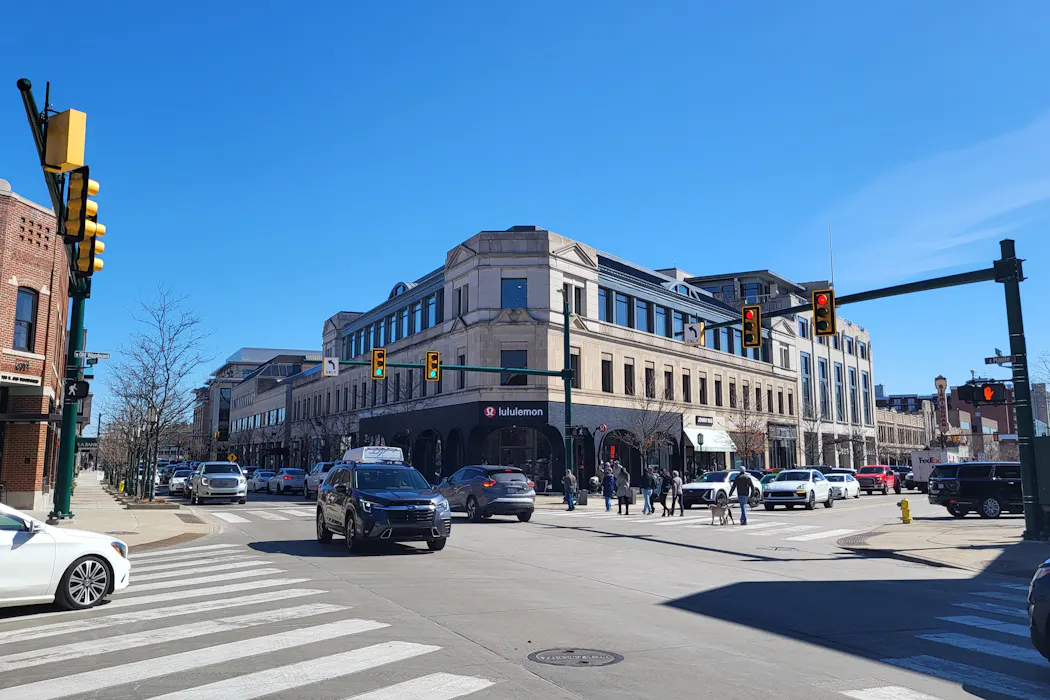
Oakland County, home to nearly 1.3 million residents[1], ranks among Michigan’s wealthiest counties[2].
But that description does not tell the whole story.
Since 2020, Oakland County’s population[3] and income[4] have grown steadily. Over the same period, Wayne County’s population declined, and Macomb County experienced slower growth.
Oakland County also has higher incomes overall. Median household income is about US$97,760 in Oakland County, compared with $77,837 in Macomb County and $60,539 in Wayne County.
Some of Oakland’s communities, such as Birmingham and Bloomfield Hills, rank among the most affluent in the tri-county Detroit metro region, with rapidly increasing home prices[5]. Homes in these communities can sell for well over $1 million[6]. Residents here have generally better health outcomes and have remained at the top of the socioeconomic ladder over time. The median household income is $153,510 in Birmingham and $189,942 in Bloomfield Hills.
However, median household incomes can be misleading and mask important differences within the county. Prosperity is not evenly shared[7], a sign of long-standing economic inequality.
My sociology research focuses on neighborhood and socioeconomic change[8] in American cities. To see where and how divides are emerging, it is necessary to look beyond overall averages and focus on communities within individual counties. Let’s see what we find when we look deeper into the communities in Oakland County.
Measuring inequality
To do that analysis, I used an index of neighborhood socioeconomic status, developed by geographer Joe Darden[9] and political scientist Sameh Kamel[10]. Darden is known for his research on residential segregation and neighborhood inequality in the Detroit region.
Urban researchers and public health scholars use this index to compare neighborhood conditions within and across metropolitan regions and to examine how inequality is distributed.
The index uses census data to combine measures of income, education, housing and employment into a single score ranging from 0 to 100. Higher scores indicate higher socioeconomic position. Like any composite index, it summarizes complex social conditions into a single measure and cannot capture every difference between communities.
Oakland County’s wealth isn’t evenly shared
On this index, Oakland County’s communities are spread across the full socioeconomic range rather than clustering entirely at the top.
In 2023 about 61% fell into the highest socioeconomic tier. The rest were divided between the middle and lowest tiers.
Communities such as Birmingham, Bloomfield Hills, Troy and Rochester Hills remain relatively well-off, with some of the highest scores on the county’s socioeconomic index.
Cities such as Pontiac, along with suburbs such as Oak Park, Hazel Park and Madison Heights, fall in the county’s lowest socioeconomic tier with some of the lowest scores on the index.
Pockets of socioeconomic change
About 80% of communities in Oakland county remained in the same tier between 2010 and 2023.
Socioeconomic stability was strongest at the top: 9 in 10 high-tier communities stayed there.
But the rest of the county tells a different story.
Several communities outside the top tier changed position over time. Wixom and Keego Harbor moved up from the lowest tier into the middle, while Oxford and Rose townships rose from the middle tier into the highest.
Addison, Brandon and White Lake townships shifted from the highest tier into the middle, while Holly township moved from the middle tier into the lowest.
Wealth gaps point to growing disadvantage
These differences point to a growing socioeconomic divide within one of Michigan’s wealthiest counties, similar to trends in other parts of the U.S[11].
Understanding these divides is key to making sense of the region’s broader challenges, from rising housing costs[12] to differences in job opportunities across metropolitan Detroit[13].
Communities with a low socioeconomic score have higher poverty and unemployment rates, lower median household income and fewer residents with a college degree or higher. Higher-tier communities show the opposite pattern, with lower poverty and unemployment, higher incomes, higher educational attainment and much higher home values.
The middle tier includes communities such as Ferndale, Auburn Hills, Waterford Township, South Lyon and Wixom. As a group, middle-tier communities resemble the county’s wealthiest areas on some indicators – such as unemployment and homeownership. On others, especially poverty, they remain closer to lower-income places.
A key distinction, however, is the continuing gap between the middle and the top. Middle-tier communities have lower incomes, fewer college graduates and far lower home values than higher-tier communities. The typical home in a middle-tier place is worth about $259,000, compared with more than $405,000 in the highest tier. The gap in median home values leads to significant differences in family wealth, which in turn affects retirement savings, the ability to pay for college and the financial cushion available during economic downturns.
These differences suggest that Oakland County’s stratification is not limited to a divide between struggling areas and wealthy ones. Instead, even its middle-tier communities lag behind the county’s most affluent places, especially when it comes to education and wealth. The divide, therefore, runs not only between the bottom and the top but also between the middle and the most advantaged communities.
How does Oakland compare with nearby counties?
In Oakland County, movement was evenly split, with 10% of communities moving up and 10% moving down, suggesting that gains and losses occurred at roughly the same rate.
In Macomb County, 13% of communities moved up, while 4% moved down. Wayne County showed the least change overall, with about 91% of communities remaining in the same tier between 2010 and 2023. This may be due to decades of economic hardship[14] that have made it more unlikely for communities there to move in either direction.
Oakland County remains one of Michigan’s wealthiest counties. But its communities are not all moving in the same direction. Understanding these differences will be important as the region plans for the future.
References
- ^ 1.3 million residents (www.oakgov.com)
- ^ Michigan’s wealthiest counties (www.lansingstatejournal.com)
- ^ Oakland County’s population (oaklandcounty115.com)
- ^ income (www.mlive.com)
- ^ rapidly increasing home prices (www.mlive.com)
- ^ over $1 million (www.zillow.com)
- ^ not evenly shared (metromodemedia.com)
- ^ neighborhood and socioeconomic change (www.emich.edu)
- ^ geographer Joe Darden (ideas.repec.org)
- ^ political scientist Sameh Kamel (www.researchgate.net)
- ^ similar to trends in other parts of the U.S (www.brookings.edu)
- ^ rising housing costs (www.mlive.com)
- ^ differences in job opportunities across metropolitan Detroit (poverty.umich.edu)
- ^ economic hardship (www.cnn.com)
Authors: Grigoris Argeros, Professor of Sociology, Eastern Michigan University