Gene editing in Indonesia: can new biotechnology solve old agricultural problems?
- Written by Emily A. Buddle, Senior Research Fellow, University of Adelaide
Like other developing countries, Indonesia is facing a familiar dilemma[1]: how to feed a growing population while protecting its extraordinary biodiversity.
Food security has become a pressing concern[2] amidst drought, pests and climate shifts. Scientists are turning to new technologies for answers. Biotechnology — specifically gene editing (GE) — emerges as a potential solution.
However, Indonesians hold diverse views on GE. While some support the technology, others oppose it[3].
Scientists are enthusiastic about the opportunities[4] to enhance staple crops like rice and improve nutritional security.
Yet many still have questions. Can GE truly support smallholder farmers and help Indonesia achieve food sovereignty? Or will it simply revive the old controversies surrounding genetically modified crops?
Our 2024 study[5] involving Indonesian stakeholders highlights that technical fixes alone cannot solve food insecurity. For gene editing to succeed, it must address the social inequalities – such as unequal land access – that farmers face.
Gene editing vs genetic modification: what is the difference?
Both gene editing and genetic modification refer to organisms with genetic material altered by humans to introduce desirable traits, such as drought tolerance or disease resistance.
While genetic modification often involves inserting genes from one species into another, gene editing makes small, targeted changes within the organism’s own DNA[6]. In other words, this technology improves crop quality without adding foreign genes.
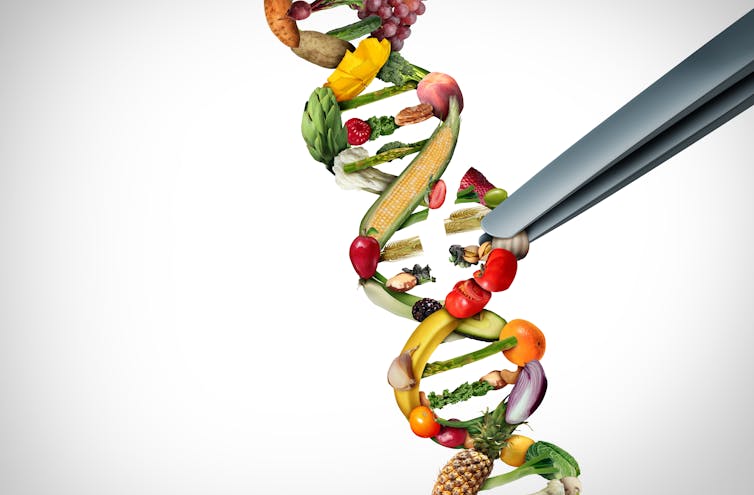
Advocates argue that this makes gene editing safer, tastier and more acceptable to the public than older modification methods[8].
But critics warn that even with these new methods, the same old questions remain: who controls the technology? Who benefits? And who gets left behind?
Indonesia’s reliance on imports
Smallholder farmers dominate Indonesia’s agricultural landscape, where rice remains the main staple food crop[9].
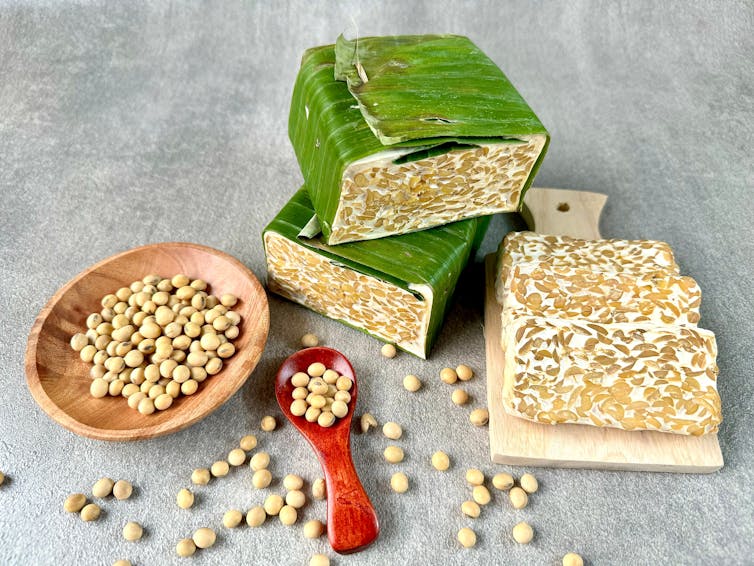
Despite increases in rice production and several other agricultural yields, the country still needs to import[10] key commodities like corn and soybeans from the United States to produce tempeh and tofu for daily consumption.
Similarly, livestock feed supplies still rely heavily on imports of genetically modified soybean meal from Argentina and Brazil[11].
Lessons from the past: old setbacks to new technologies
To reduce this dependence on imports, the government revised regulations on genetically modified crops[13] to enable domestic production.
The first commercial cultivation of modified crops, Bt cotton[14], took place between 2001 and 2002. However, the project ultimately failed after the provider, Monsanto, withdrew in 2003, citing difficult regulatory hurdles and limited land for cultivation.
Between 2003 and 2021, no commercial genetically modified crops were grown, apart from sugarcane in limited government-owned areas[15].
Following these setbacks, the government has looked towards gene editing. Since 2021, corn, potato and sugarcane varieties have been approved for commercial cultivation[16]. While domestic production remains limited, Indonesia is a major importer of gene-edited commodities[17], particularly soybeans and corn, for both human consumption and livestock feed.
Today, researchers at Indonesia’s National Research and Innovation Agency (BRIN)[18] are developing gene-edited varieties including rice, cassava and sorghum. The government remains optimistic, presenting gene editing as a way to boost productivity and reduce reliance on food imports[19].
Yet, questions remain over how this technology will reach farmers – and on whose terms
Read more: NZ's gene technology reform carries benefits and risks – a truly independent regulator will be vital[20]
Fairness beyond technical fixes
Gene editing is often promoted as a quick technical fix for complex agricultural challenges. Yet its success and public acceptance depend on far more than science[21]. It hinges on broader social and economic systems[22]: who has access to seeds, who controls the knowledge and who decides which genetic changes are needed.
Our study[23] shows that many people still do not fully understand the technology. Between April and August 2024, we interviewed 11 stakeholders in Indonesia. This included farmer groups, government officials, researchers, NGOs and consumer associations.

References
- ^ familiar dilemma (doi.org)
- ^ Food security has become a pressing concern (doi.org)
- ^ some support the technology, others oppose it (doi.org)
- ^ Scientists are enthusiastic about the opportunities (doi.org)
- ^ 2024 study (link.springer.com)
- ^ gene editing makes small, targeted changes within the organism’s own DNA (doi.org)
- ^ shutterstock (www.shutterstock.com)
- ^ more acceptable to the public than older modification methods (doi.org)
- ^ main staple food crop (openknowledge.fao.org)
- ^ import (www.grainbrokers.com.au)
- ^ Argentina and Brazil (apps.fas.usda.gov)
- ^ shutterstock (www.shutterstock.com)
- ^ the government revised regulations on genetically modified crops (apps.fas.usda.gov)
- ^ Bt cotton (www.isaaa.org)
- ^ limited government-owned areas (doi.org)
- ^ for commercial cultivation (www.trade.gov)
- ^ is a major importer of gene-edited commodities (apps.fas.usda.gov)
- ^ (BRIN) (www.brin.go.id)
- ^ reduce reliance on food imports (apps.fas.usda.gov)
- ^ NZ's gene technology reform carries benefits and risks – a truly independent regulator will be vital (theconversation.com)
- ^ Yet its success and public acceptance depend on far more than science (doi.org)
- ^ It hinges on broader social and economic systems (doi.org)
- ^ study (link.springer.com)
- ^ However, it cannot resolve unequal access to land, credit and markets — the main challenges for smallholders (doi.org)
- ^ Plants get a GMO glow-up: Genetically modified varieties are coming out of the lab and into homes and gardens (theconversation.com)
Authors: Emily A. Buddle, Senior Research Fellow, University of Adelaide