Ukraine conflict brings cybersecurity risks to US homes, businesses
- Written by Richard Forno, Principal Lecturer, Cybersecurity and Assistant Director, UMBC Cybersecurity Center, University of Maryland, Baltimore County
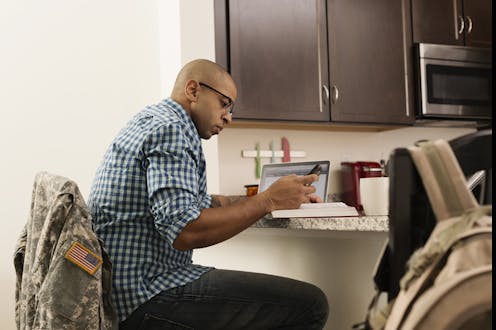
All cybersecurity is local, regardless of the world situation. That means it’s personal, too – in Americans’ homes, computers and online accounts. As violence spreads thousands of miles away from the U.S., my strong recommendation is that all Americans remain vigilant and check on[1] their own cybersecurity[2].
While organizations reinforce their cybersecurity posture during this period of geopolitical tension, I also suggest people regularly ensure their computer, mobile devices and software are updated, double-check that all passwords are secure[3] and all key accounts are protected by two-factor authentication[4]. Beware that phishing attacks[5] may increase, seeking to trick people into clicking links[6] that grant attackers access to computer systems. These are a few simple steps that can help increase one’s cybersecurity preparedness both now and for the future.
Recent Russian-linked cyberattacks, including against energy pipelines[7], federal government services[8], and attacks on local governments[9], first responders[10], hospitals[11] and private corporations, show the potential for Russian cyber warriors to put U.S. civilians at risk. All these entities should be more vigilant over the coming days.
In the days before Russia invaded Ukraine, a series of cyberattacks disrupted Ukrainian government and business websites[12] – despite Ukraine’s cyberdefense teams’ being prepared[13] to defend against them.
With many Americans working from home because of the pandemic, the U.S. is more vulnerable than it might have been otherwise: Home networks and computers are often less protected[14] than those at an office – which makes them enticing targets.
Russian cyber capabilities, and threats from Russian President Vladimir Putin[15], mean that what might look like random technical glitches on personal computers, websites and home networks may not be accidental. They could be precursors to – or actual parts of – a larger cyberattack. Therefore, ongoing vigilance is more crucial than ever.
[Like what you’ve read? Want more? Sign up for The Conversation’s daily newsletter[16].]
References
- ^ check on (www.cisa.gov)
- ^ own cybersecurity (www.cisa.gov)
- ^ passwords are secure (theconversation.com)
- ^ two-factor authentication (theconversation.com)
- ^ phishing attacks (www.npr.org)
- ^ trick people into clicking links (theconversation.com)
- ^ energy pipelines (www.energy.gov)
- ^ federal government services (www.rpc.senate.gov)
- ^ local governments (theconversation.com)
- ^ first responders (www.nbcnews.com)
- ^ hospitals (theconversation.com)
- ^ cyberattacks disrupted Ukrainian government and business websites (www.pbs.org)
- ^ cyberdefense teams’ being prepared (www.npr.org)
- ^ often less protected (www.cisa.gov)
- ^ threats from Russian President Vladimir Putin (www.msn.com)
- ^ Sign up for The Conversation’s daily newsletter (memberservices.theconversation.com)
Authors: Richard Forno, Principal Lecturer, Cybersecurity and Assistant Director, UMBC Cybersecurity Center, University of Maryland, Baltimore County