New industry standards and tech advances make pre-owned electronics a viable holiday gift option
- Written by Suvrat Dhanorkar, Associate Professor of Operations Management, Georgia Institute of Technology
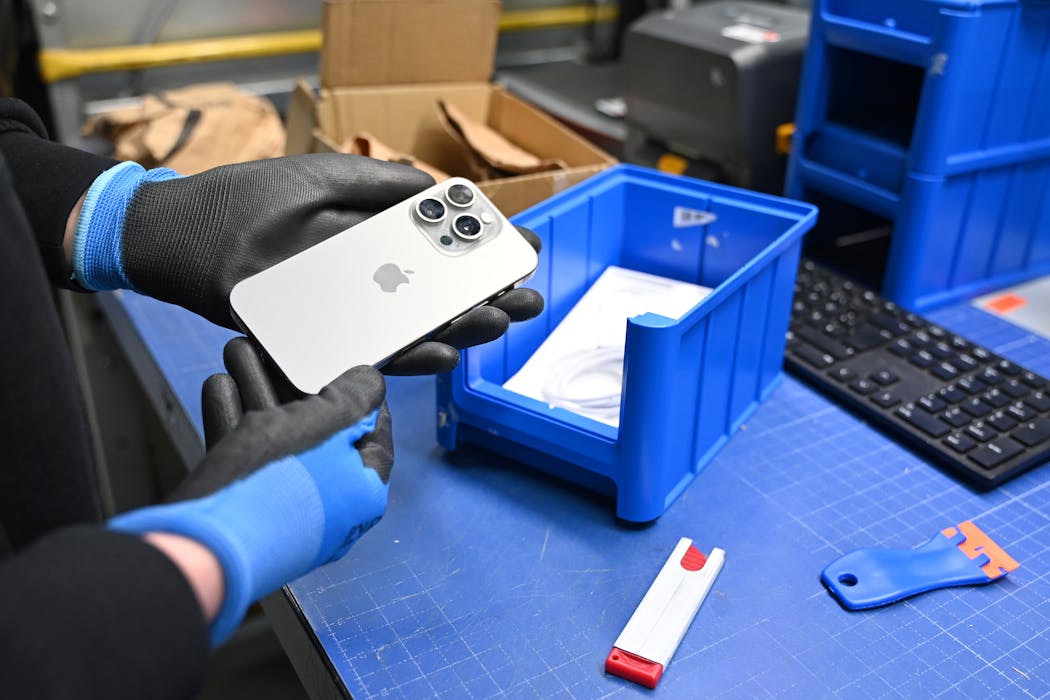
Electronic gifts are very popular, and in recent years, retailers have been offering significant discounts on smartphones, e-readers and other electronics labeled as “pre-owned.” Research I have co-led finds that these pre-owned options are becoming increasingly viable, thanks in part to laws and policies that encourage recycling and reuse[1] of devices that might previously have been thrown away.
Amazon, Walmart and Best Buy have dedicated pages on their websites for pre-owned devices. Manufacturers like Apple and Dell, as well as mobile service providers like AT&T and Verizon, offer their own options for customers to buy used items. Their sales rely on the availability of a large volume of used products[2], which are supplied by the emergence of an entire line of businesses[3] that process used, discarded or returned electronics.
Those developments are some of the results of widespread innovations across the electronics industry[4] that supply chain researcher Suresh Muthulingam[5] and I have linked to California’s Electronic Waste Recycling Act[6], passed in 2003.
Recycling innovation
Originally intended to reduce the amount of electronic waste flowing into the state’s landfills, California’s law did far more, unleashing a wave of innovation[7], our analysis found.
We analyzed the patent-filing activity of hundreds of electronics firms over a 17-year time span from 1996 to 2012. We found that the passage of California’s law not only prompted electronics manufacturers to engage in sustainability-focused innovation, but it also sparked a surge in general innovation around products, processes and techniques.
Faced with new regulations, electronics manufacturers and suppliers didn’t just make small adjustments, such as tweaking their packaging to ensure compliance. They fundamentally rethought their design and manufacturing processes, to create products that use recycled materials and that are easily recyclable themselves.
For example, Samsung’s Galaxy S25[8] smartphone is a new product that, when released in May 2025, was made of eight different recycled materials, including aluminum, neodymium, steel, plastics and fiber.
Combined with advanced recycling technologies and processes, these materials can be recovered and reused several times in new devices and products. For example, Apple invented the Daisy Robot[9], which disassembles old iPhones in a matter of seconds and recovers a variety of precious metals, including copper and gold. These materials, which would otherwise have to be mined from rock, are reused in Apple’s manufacturing process for new iPhones and iPads.
How do consumers benefit?
In the past two decades, 25 U.S. states and Washington D.C. have passed laws requiring electronics recycling and refurbishing[10], the process of restoring a pre-owned electronic device so that it can function like new.
The establishment of industry guidelines and standards[11] also means that all pre-owned devices are thoroughly tested for functionality and cosmetic appearance before resale.
Companies’ deeper engagement with innovation appears to have created organizational momentum that carried over into other areas of product development. For example, in our study, we found that the passage of California’s law directly resulted in a flurry of patents related to semiconductor materials, data storage and battery technology[12], among others. These scientific advances have made devices more durable, repairable and recyclable.
For the average consumer, the recycling laws and the resulting industry responses mean used electronics are available with similar reliability, warranties and return policies as new devices – and at prices as much as 50% lower[13].
References
- ^ thanks in part to laws and policies that encourage recycling and reuse (doi.org)
- ^ large volume of used products (www.weforum.org)
- ^ an entire line of businesses (finance.yahoo.com)
- ^ widespread innovations across the electronics industry (doi.org)
- ^ Suresh Muthulingam (sites.psu.edu)
- ^ California’s Electronic Waste Recycling Act (calrecycle.ca.gov)
- ^ unleashing a wave of innovation (doi.org)
- ^ Galaxy S25 (news.samsung.com)
- ^ Daisy Robot (www.instagram.com)
- ^ electronics recycling and refurbishing (www.epa.gov)
- ^ industry guidelines and standards (www.ctia.org)
- ^ patents related to semiconductor materials, data storage and battery technology (doi.org)
- ^ at prices as much as 50% lower (www.mordorintelligence.com)
Authors: Suvrat Dhanorkar, Associate Professor of Operations Management, Georgia Institute of Technology