Trump’s ‘Venezuela solution’ to Cuba would see the island nation returned to a client state
- Written by Joseph J. Gonzalez, Associate Professor of Global Studies, Appalachian State University
The U.S. and Cuban governments have been at odds[1] since the conclusion of the Cuban Revolution 67 years ago. Yet despite pressure, embargoes and various CIA plots, the communist government in Havana has resisted the wishes of its very powerful neighbor separated by just 90 miles (145 kilometers) of water.
From my perspective as an expert on Havana-Washington ties[2], however, this moment seems different.
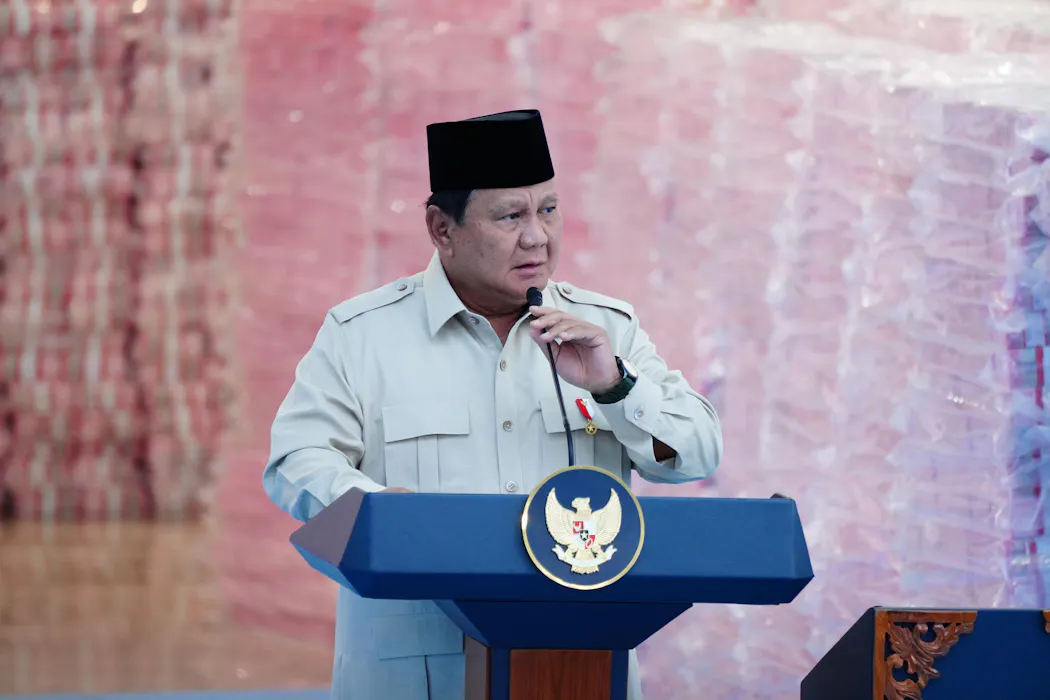
For the first time since 1959, an American president, Donald Trump, appears on the verge of doing[3] what so many of his predecessors have longed to do: depose a Cuban president[4] and compel the Cuban government to align itself with American economic and strategic interests[5].
If Trump succeeds – either through military might or negotiation – then Cuba looks set to become something less than a sovereign nation and more akin to an American client state.
A partnership of unequals?
At first glance, the possibility of such a change looks epic, even monumental: an end to the Cuban Revolution as we have known it.
But deep in the annals of U.S.-Cuban history, there are echoes of Trump’s demands.
From 1898 to 1959, the American government essentially ran Cuba[6] as a colony within its empire.
Americans repeatedly decided[7] who would occupy the presidential palace, while Cuban politicians protected U.S. investments[8] and supported U.S. supremacy[9] in the Caribbean. American gangsters ran the hotels[10] and the gambling.
That relationship ended with the revolution and Fidel Castro’s assumption of power[11]. But if Trump has his way, the future of the U.S. and Cuba will look very much like it did in the pre-Castro era: a partnership of unequals.
Heightened tensions
During his first term, Trump turned away from President Barack Obama’s “Cuban Thaw[12],” which had established diplomatic relations, eased travel restrictions and raised hopes of an end to the decades-old U.S. embargo.
In place of engagement with the Cuban government, Trump strengthened the embargo[13], all but closed the U.S. Embassy[14] in Havana and further restricted[15] travel by American citizens to the island.
Trump also returned Cuba to the State Department’s list of nations[16] that support terrorism, where it resides today.
Now, one year into his second term, Trump is using coercion backed with a tacit military threat to increase pressure on the Cuban government.
On Jan. 3, 2026, U.S. forces, seized Venezuelan President Nicolás Maduro[17] and his wife, bringing them to New York to stand trial.
During the raid, U.S. forces killed between 75 and 100 Venezuelans[18] and a coterie of Cubans[19] providing security to Maduro.
Venezuela was Cuba’s closest ally[20], providing the island with oil at vastly reduced prices[21] in exchange for doctors[22] and advisers[23] for Venezuela’s security and intelligence services.
Following Maduro’s arrest, Trump made it clear that the U.S. would no longer permit[24] any country to supply Cuba with oil.
Without oil, Trump predicted that the Cuban government would soon collapse[25] and suggested that Marco Rubio, his Cuban American Secretary of State, could become[26] president of Cuba.
Secret negotiations
Cuba was in severe distress[27] long before Maduro’s arrest.
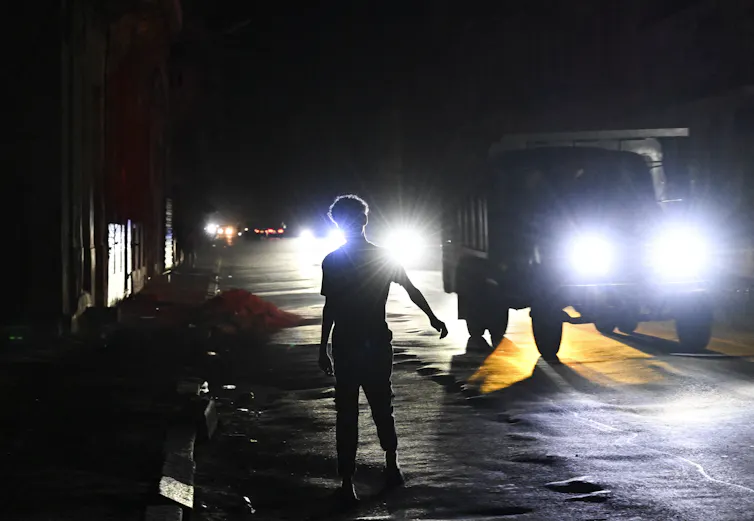
In the years since the COVID-19 pandemic, the government has found it almost impossible[28] to maintain adequate[29] electricity, water, public health and public transport.
Then came the Trump administration’s oil embargo, which may push Cuba into the worst economic crisis[30] in its history, prompting longer, deeper blackouts[31] and further reductions[32] in public services.
Hunger is now a widespread concern[33], garbage is piling up[34] and mosquito-borne illnesses are skyrocketing[35]. Dissent is also becoming more public – and more violent[36].
Publicly, the communist government responded defiantly[38] to the Trump administration’s aggressive actions, pledging to resist American pressure just as it had for the better part of 60 years.
Privately, however, the Cuban government agreed to talks[39] with the Trump administration, hoping to find a way to ease American pressure.
The White House reportedly no longer considers[40] the collapse of the Cuban government desirable, as it would precipitate a migration crisis[41] that threatens the stability of the Caribbean, including to a South Florida that is home to the world’s largest Cuban diaspora community.
The ‘Venezuelan Solution’
Cuba’s president, Miguel Díaz-Canel, has publicly acknowledged[42] talks with the U.S. But the particulars remain obscure.
The U.S. government reportedly wants Díaz-Canel to leave the country[43] and permit American investment[44] in Cuba, particularly from Cuban Americans, which has long been prohibited.
The Cuban government has already reportedly acceded[45] to this latter demand.
The Trump administration also wants more political prisoners[46] released and a purge[47] of officials who were close to Fidel and Raúl Castro, his successor as president, and remained powerful[48] after the Cuban revolutionary leader’s death in 2016. According to Amnesty International[49], Cuba has at least 1,000 prisoners of conscience.
In exchange, the White House would be willing to permit members of the Castro family[50] to remain in Cuba and allow for the importation of oil[51]. The rest of the Cuban government[52] would also remain intact.
Cubans I know are calling this deal the “Venezuela Solution.” Much like Maduro’s successors, Cuba’s leaders would remain rulers of Cuba[53] – provided they accept diminished political sovereignty and respect U.S. policy priorities.
Back to the future
Such a deal, if it happens, would return Cuba to the status of an American client state[54], the status it held long before Castro seized power and allied himself with the Soviet Union.
In 1898, the U.S. intervened[55] in the Cuban War of Independence, the last in a series of wars[56] fought by Cubans against their onetime Spanish colonizers.
The United States kicked out the Spanish, occupied Cuba[57] and proclaimed its desire[58] to turn Cuba into an independent, sovereign nation-state.
But that never happened.
Distrusting the Cubans’ ability to govern themselves, the U.S. retained the legal right[59] to intervene in Cuban politics.
Between 1898 and 1959, the U.S. government, through its ambassador in Havana, determined who would be president of Cuba[60] whenever a dispute arose.
Cuban politicians, eager to preserve their positions, guarded American property, despite Cuban resentments[61], and supported U.S. foreign policy throughout Latin America and the world.
On the eve of the revolution, Americans owned more than US$800 million[62] in property in Cuba — the equivalent of at least $9 billion today.
Americans dominated not only the sugar industry[63] but also public utilities, mining and tourism, which American organized crime came to control.
What’s next?
For more than 60 years, pre-revolutionary Cuba endured independence without sovereignty[64] as an American client state.
Could such a relationship reemerge? For now, the situation between the U.S. and Cuba remains fluid, and the terms of discussions are shrouded in secrecy.
Trump, publicly, promotes a “friendly takeover of Cuba[65],” insisting that he could do with Cuba “anything I want[66].”
But one thing remains certain. While Trump remains in the White House and Rubio heads the State Department, U.S. maximum pressure on Cuba will not cease.
The Trump administration is committed to ending[67] the Cuban government’s resistance to American power and American investment, regardless of the direct humanitarian costs in the form of the oil embargo and other penalties.
Any deal with Trump will be a bitter pill for Cuba’s political elite to swallow.
But absent an oil-rich ally, like Russia or Venezuela, and faced with an implacable enemy, Cuban officials may have no choice but to bring Cuba back into the orbit of American power, at least for now.
References
- ^ at odds (www.cfr.org)
- ^ expert on Havana-Washington ties (interdisciplinary.appstate.edu)
- ^ verge of doing (thehill.com)
- ^ depose a Cuban president (www.nytimes.com)
- ^ economic and strategic interests (www.npr.org)
- ^ ran Cuba (www.pbs.org)
- ^ repeatedly decided (digitalcommons.library.uab.edu)
- ^ protected U.S. investments (digital.library.pitt.edu)
- ^ U.S. supremacy (www.juancole.com)
- ^ gangsters ran the hotels (www.npr.org)
- ^ Fidel Castro’s assumption of power (www.history.com)
- ^ Cuban Thaw (elischolar.library.yale.edu)
- ^ strengthened the embargo (www.congress.gov)
- ^ closed the U.S. Embassy (www.propublica.org)
- ^ further restricted (www.pbs.org)
- ^ list of nations (cu.usembassy.gov)
- ^ seized Venezuelan President Nicolás Maduro (www.war.gov)
- ^ Venezuelans (www.aljazeera.com)
- ^ Cubans (www.reuters.com)
- ^ closest ally (www.bu.edu)
- ^ oil at vastly reduced prices (www.miamiherald.com)
- ^ doctors (www.politico.com)
- ^ advisers (www.wsj.com)
- ^ no longer permit (www.aljazeera.com)
- ^ soon collapse (theconversation.com)
- ^ could become (www.foxnews.com)
- ^ severe distress (www.hrw.org)
- ^ almost impossible (www.as-coa.org)
- ^ maintain adequate (horizontecubano.law.columbia.edu)
- ^ worst economic crisis (www.cato.org)
- ^ prompting longer, deeper blackouts (www.nbcnews.com)
- ^ further reductions (wjla.com)
- ^ widespread concern (www.cnn.com)
- ^ piling up (www.reuters.com)
- ^ are skyrocketing (www.theguardian.com)
- ^ more violent (www.foxnews.com)
- ^ Yamil Lage/AFP via Getty Images (www.gettyimages.com)
- ^ responded defiantly (apnews.com)
- ^ agreed to talks (www.latimes.com)
- ^ no longer considers (www.nytimes.com)
- ^ a migration crisis (wgme.com)
- ^ publicly acknowledged (www.bbc.com)
- ^ Díaz-Canel to leave the country (www.aljazeera.com)
- ^ American investment (www.as-coa.org)
- ^ has already reportedly acceded (www.nytimes.com)
- ^ more political prisoners (www.npr.org)
- ^ and a purge (www.nytimes.com)
- ^ remained powerful (www.miamiherald.com)
- ^ Amnesty International (www.amnesty.org)
- ^ the Castro family (www.latintimes.com)
- ^ importation of oil (www.nytimes.com)
- ^ Cuban government (www.nytimes.com)
- ^ remain rulers of Cuba (www.latintimes.com)
- ^ American client state (www.pbs.org)
- ^ U.S. intervened (guides.loc.gov)
- ^ a series of wars (guides.loc.gov)
- ^ occupied Cuba (history.state.gov)
- ^ proclaimed its desire (doi.org)
- ^ retained the legal right (www.archives.gov)
- ^ who would be president of Cuba (www.jstor.org)
- ^ despite Cuban resentments (ascecubadatabase.org)
- ^ US$800 million (history.state.gov)
- ^ not only the sugar industry (ask.ifas.ufl.edu)
- ^ independence without sovereignty (www.brookings.edu)
- ^ friendly takeover of Cuba (www.cbsnews.com)
- ^ anything I want (www.cnn.com)
- ^ committed to ending (www.nytimes.com)
Authors: Joseph J. Gonzalez, Associate Professor of Global Studies, Appalachian State University