Free 10-minute online programs aimed at overcoming depression led to real improvements – new research
- Written by Benjamin Kaveladze, Postdoctoral Fellow in Mental Health Resources, Dartmouth College
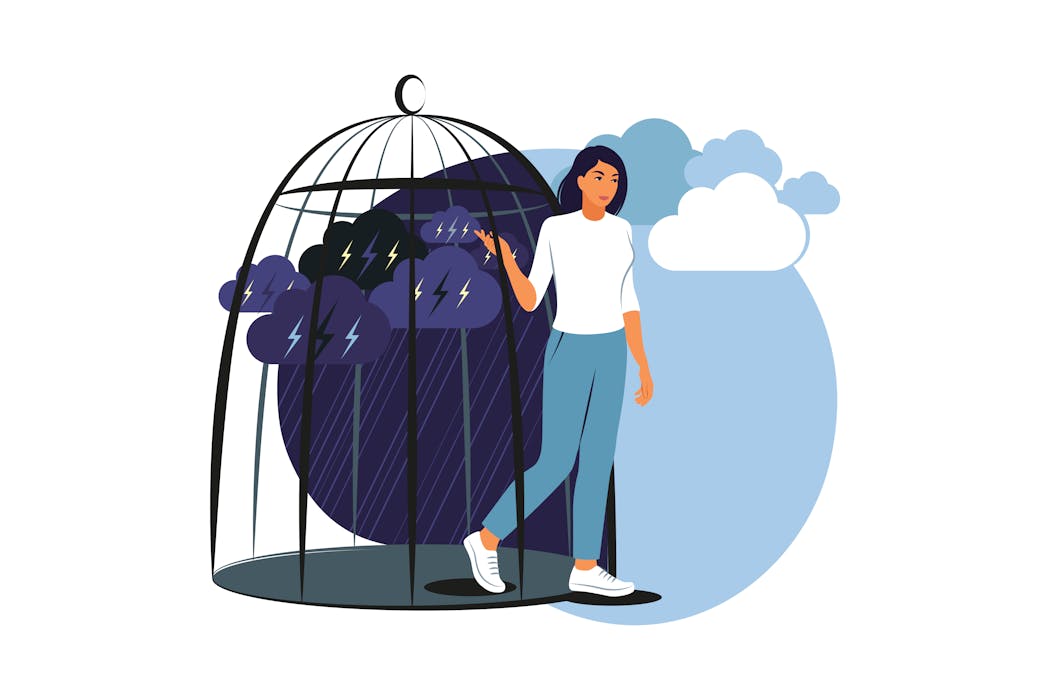
A well-designed 10-minute online exercise can spark small reductions in depression. That’s the key finding of my team’s paper, published in Nature Human Behaviour[1].
Many people believe that to start overcoming depression[2], they need a therapist, medication or a radical change in their environment. However, our study shows that taking small steps to learn practical skills can lead to measurable improvements in depressive symptoms.
In 2024, my team and I took to social media to pose a question to the field of mental health: If you could get 500 people struggling with depression to give you just 10 minutes of their attention, how would you spend that time? We received 66 responses from people around the world, including scientists, mental health app developers, popular YouTubers and students.
We chose what we considered the 12 most promising submissions to develop and rigorously test in one of the largest randomized controlled trials of mental health interventions ever conducted. These 12 “single-session interventions” ranged widely. Some used science-backed approaches emerging from in-person psychotherapy, while others were entirely novel. One featured a generative artificial intelligence-based expressive writing exercise. Another repurposed an inspirational Thai Life Insurance ad[3] to show how helping others in small ways can make life more meaningful. Each intervention took under 10 minutes and was entirely self-guided.
In the study, we randomly assigned 7,505 American adult participants to complete one of the 12 single-session interventions or a control condition where they learned about trout[4]. Participants answered questions about their well-being immediately after completing the intervention and again a month later. Each participant only completed the intervention (or control) one time.
Nearly all the interventions left users feeling hopeful and motivated to make positive changes immediately after completing them. But a month later, only two – Interactive Cognitive Reappraisal[5] and Finding Focus[6] – meaningfully reduced depression. These monthlong gains were small on average – around a 4% greater reduction on a standard depression measure for the top two exercises compared with the control – but small average effects can make a real difference, especially because these programs’ free, brief nature gives them a unique ability to reach people at a global scale.
Why it matters
Depression is a profound burden for the 332 million people[7] it affects each year globally. While evidence-based treatments like psychotherapy are effective[8], long-term professional care is not an option for most people due to barriers[9] like lack of access, cost and stigma. Our study is the first to show that single-session interventions can lead to monthlong reductions in depression in adults.
My team’s objective in studying single-session interventions is simple: If we can distill core elements of effective psychological treatments into short, user-friendly formats, many more people will be able to access science-backed support when they need it. The goal is not to replace therapists or psychiatrists, but to offer a reliable option for people who may otherwise receive no support at all. Single-session interventions like these can also be used to support traditional treatments, like for people on a waitlist to see a therapist.
This Thai life insurance ad on “believing in good” went viral and became the basis of an effective program for managing depression.What’s next
Having identified effective single-session interventions for overcoming depression, our top priority is to spread the word that these evidence-based brief mental health resources are available online at no cost. For example, Koko, the team that created the most impactful intervention in our study, created free five- to 10-minute interventions for a range of mental health challenges[10]. You can also try all 12 of the single-session interventions we tested[11]. Our published paper has more information about each one’s effectiveness[12].
My team[13] is continuing to research single-session interventions and study their implementation in a range of settings, including social media, schools and therapy waitlists. Our collaborators are exploring how AI can make single-session interventions more engaging and personalized to users’ needs.
For many people, depression can make gaining control of one’s thoughts and feelings seem out of reach. This study shows that taking just 10 minutes to learn evidence-based skills can be a valuable first step toward longer-term improvement.
The Research Brief[14] is a short take on interesting academic work.
References
- ^ published in Nature Human Behaviour (doi.org)
- ^ believe that to start overcoming depression (doi.org)
- ^ Thai Life Insurance ad (www.youtube.com)
- ^ learned about trout (northwestern.az1.qualtrics.com)
- ^ Interactive Cognitive Reappraisal (ssi.kokocares.org)
- ^ Finding Focus (northwestern.az1.qualtrics.com)
- ^ 332 million people (iris.who.int)
- ^ like psychotherapy are effective (doi.org)
- ^ for most people due to barriers (doi.org)
- ^ 10-minute interventions for a range of mental health challenges (www.tryprojectyes.org)
- ^ try all 12 of the single-session interventions we tested (osf.io)
- ^ more information about each one’s effectiveness (doi.org)
- ^ My team (www.schleiderlab.org)
- ^ Research Brief (theconversation.com)
Authors: Benjamin Kaveladze, Postdoctoral Fellow in Mental Health Resources, Dartmouth College